 By Michael Owen
Every traveler knows the rush of finding an impossibly cheap flight. You spot a cross-country ticket for thirty-nine dollars, grab your credit card, and congratulate yourself on beating the system. Then comes the checkout process. By the time you navigate five pages of add-ons, pay to bring a weekend duffel, and clear the payment screen, that thirty-nine-dollar bargain has quietly ballooned into a two-hundred-dollar transaction.
This is not an accident or an occasional website glitch. It is the core financial engine of ultra-low-cost carriers. Modern budget airlines do not view a seat on an airplane as a finished product. They view it as an entry ticket to an extensive, a la carte menu where every single amenity, convenience, and physical possession carries its own price tag. In airline industry parlance, this is known as unbundling. In practical terms for passengers, it means that the base fare is often a misleading fiction.
When you understand how these ancillary fees operate, you can make budget flights work in your favor rather than falling into an expensive trap. Beating these airlines at their own game comes down to anticipating the hidden fees before you book and knowing exactly how to strip the flight down to its actual essentials.
The Baggage Gauntlet: Where Cheap Flights Fall Apart
The single fastest way to double the price of a budget flight is to bring luggage. On legacy carriers, you can almost always count on bringing a standard rolling bag into the overhead bin alongside your backpack. Budget carriers have dismantled that assumption entirely.
On airlines like Frontier or Allegiant, your base fare purchases permission to bring a single personal item that must fit completely beneath the seat in front of you. Everything else—overhead carry-ons, checked luggage, and sporting gear—is priced separately. Worse, luggage pricing is not fixed; it is dynamic and designed around artificial urgency.
The Dynamic Pricing Trap
The cost of a bag rises dramatically the longer you wait to purchase it. Adding an overhead carry-on during the initial flight booking might cost thirty-five dollars. If you wait until online check-in, that price often jumps to fifty dollars. If you show up at the ticket counter with an unbooked bag, expect to pay sixty-five dollars.
If a gate agent flags your bag right before you board, you could easily be charged seventy-five to ninety-nine dollars on the spot. If you take a round-trip flight with a single carry-on and fail to prepay, the baggage fees alone can dwarf the original cost of your flight.
The Weight Limit Reduction
Even seasoned travelers get caught by the checked baggage threshold. The global airline standard for a checked bag is fifty pounds. Many budget carriers quietly lower their limit to forty pounds.
Pack the way you normally would for a week away, and you risk watching the check-in scale hit forty-three pounds. The airline will not simply charge you for the extra three pounds at a modest per-pound rate; they will slap you with an overweight baggage fee that often starts at fifty dollars each way.
How to Beat the Luggage Fees
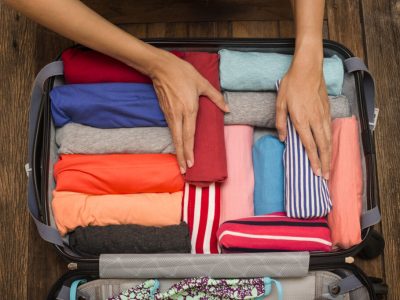
First, invest in a dedicated under-seat travel backpack. Several manufacturers design bags specifically built to match the exact maximum personal item dimensions for ultra-low-cost carriers. A twenty-eight to thirty-liter rectangular backpack can easily fit four days of clothes, toiletries, and electronics without triggering a carry-on fee.
Second, if you must check a bag, weigh it before you leave home using a digital luggage scale. If your suitcase sits at forty-one pounds, put on your heaviest jacket, wear your heaviest pair of boots, and put your electronics in your pockets until the scale reads thirty-nine pounds.
Finally, if you are traveling with a partner or a family, consolidate. Instead of three people paying for three individual carry-ons, pay for one shared checked bag. You will save hundreds of dollars across a round trip while avoiding the hassle of dragging multiple roller bags through the terminal.
The Seating Dilemma: The Cost of Sitting Together
Few things induce panic quite like reaching the seat selection page and seeing that every remaining seat carries a fee between fifteen and eighty dollars per flight segment.
Budget airline booking engines are engineered to manufacture anxiety. They present travelers with warnings about being separated from their travel companions or assigned to a cramped middle seat at the very back of the plane. For a family of four flying round-trip, paying thirty dollars per person, per leg just to sit together adds two hundred and forty dollars to the trip.
The Separation Algorithm
Budget airlines use automated seat assignment logic that routinely scatters groups across different rows if they decline paid seating. If two people book on the exact same confirmation code without paying for seats, the algorithm will frequently split them into two different middle seats rows apart.
However, if you are traveling as two adults, ask yourself whether sitting next to your companion for two hours is genuinely worth sixty dollars. For short-haul flights, accepting whatever random seat the system assigns at check-in is the easiest way to keep your trip inexpensive.
The Reality for Families with Young Children
Federal regulations and Department of Transportation guidelines strongly pressure airlines to seat children aged thirteen and under adjacent to an accompanying adult at no additional cost. While airlines will still show you paid seat maps during the initial booking flow, you do not need to pay extra to ensure your six-year-old is not sitting across the cabin.
Skip the paid seats during checkout. When you check in, or when you reach the gate, speak directly with an agent if your family is separated. Gate agents routinely reshuffle adjacent seating for young children without charging a fee.
The Airport Check-In and Boarding Pass Traps
We live in a digital-first era, and budget airlines penalize passengers heavily for relying on traditional customer service counters.
Some international budget carriers charge upwards of thirty dollars just to check in at the airport counter if you failed to check in online beforehand. Domestic budget carriers frequently charge an auxiliary fee of five to twenty dollars simply to print a paper boarding pass at the desk.
To avoid these unnecessary penalties:
-
Download the airline’s mobile app immediately after booking.
-
Set an alarm on your phone for twenty-four hours before departure, which is when online check-in typically opens.
-
Check in through the app and save your boarding pass directly to your smartphone wallet, or take a high-resolution screenshot of the barcode.
-
If you prefer paper, print your boarding pass at home or at your hotel business center before heading to the terminal. Never ask a counter agent to print it for you unless the airline’s mobile system explicitly malfunctioned.
Phantom Fees: Payment Surcharges and Unchecked Add-Ons
As you proceed through the payment screen, budget airlines employ classic digital dark patterns. These are user interfaces carefully designed to trick you into purchasing products you never asked for.
You will encounter pre-selected checkmarks for comprehensive travel insurance, priority boarding upgrades, carbon offsets, and paid flight-status text messages. These add-ons are often phrased in confusing language, using double negatives where clicking “No” makes you feel as though you are waiving your basic legal rights. Read every single checkbox carefully and uncheck everything that is not the core flight itself.
Another hidden cost lurks in the carrier usage fee, sometimes labeled as an electronic usage charge or passenger interface fee. In the United States, several ultra-low-cost carriers build a fee of around twenty-two dollars per passenger, per segment into their online ticket prices to avoid paying federal excise taxes on that portion of the fare.
Legally, they must offer a way for passengers to buy the ticket without paying this fee, which means you can technically bypass it by purchasing your flight in person at the airport ticket counter. While driving to an airport just to buy a ticket rarely makes sense for a single flight, travelers buying multiple round-trip tickets for a large family vacation can occasionally save several hundred dollars by booking at the terminal counter during scheduled agent hours.
The Geography Trap: Secondary Airports and Transportation Math
Budget airlines keep operating expenses low by flying into secondary or tertiary airports where gate fees and landing rights are dramatically cheaper.
You might think you are flying into a major metropolitan hub, only to discover your flight lands an hour and a half outside the city center. In the United States, this often means flying into airports like Trenton-Mercer instead of Philadelphia, Sanford instead of Orlando International, or Stewart instead of JFK or Newark.
This geographic separation introduces secondary expenses that many travelers completely leave out of their initial budget calculations:
-
Long-distance rideshare charges that easily exceed eighty to one hundred dollars each way.
-
Expensive airport express bus fares or regional train connections.
-
Added car rental mileage, highway tolls, and hours of wasted vacation time.
Before booking an ultra-cheap ticket, open a mapping application and calculate the ground transportation expenses from the arrival airport to your actual hotel or meeting location. If an alternate flight into the city’s main airport costs sixty dollars more on a legacy carrier, but saves you a seventy-dollar Uber ride and two hours in traffic, the legacy carrier is the cheaper and smarter choice.
The Reliability Penalty: What Disruptions Actually Cost
Perhaps the most significant hidden cost of budget air travel is one that does not appear on any receipt until things go wrong: operational fragility.
Major legacy carriers operate massive fleets with thousands of flights every day. If a mechanical issue grounds an American, Delta, or United aircraft, the airline has spare planes, crew reserves, and dozens of alternative flights throughout the day to rebook you. They also participate in interline agreements, which allow them to move stranded passengers onto competing airlines when necessary.
Ultra-low-cost carriers run razor-thin operational margins. Their planes fly nearly continuously from dawn until late at night, leaving zero buffer for maintenance delays or weather interruptions. More importantly, many budget carriers only fly specific city pairs two or three times a week.
If your Thursday budget flight is canceled due to a crew shortage or maintenance problem, the airline might not have another scheduled seat on that route until Sunday. Budget carriers do not have interline agreements and will not pay to put you on a Delta or United flight.
If you are stuck paying for three unexpected nights in a hotel, dining out, and missing two days of work, that fifty-dollar flight becomes the most expensive travel decision of your year. When traveling for high-stakes events like weddings, cruises, or critical business meetings, the risk profile of a budget carrier carries an unacceptably high financial penalty.
The Total Cost Framework
Flying on a budget carrier is not inherently a mistake. It is simply a specific financial contract that requires strict adherence to narrow rules. When approached correctly, ultra-low-cost airlines provide genuine utility and real savings.
The secret to winning is calculating the total cost of the trip before entering your credit card details. Add up the base fare, the mandatory cost of your luggage, the ground transit fees from the arrival airport, and any seat assignments you cannot live without.
Compare that final, realistic number directly against a standard economy ticket on a traditional carrier. If the budget airline still comes out significantly ahead, pack your under-seat bag, check in on your phone, bring an empty water bottle from home, and enjoy the savings. If the difference is only twenty or thirty dollars, pay for the traditional ticket and leave the hidden fees behind.
What is your reaction?
Excited
0
Happy
0
In Love
0
Not Sure
0
Silly
0